
What is Shock Loss? Why Do Transplanted Hairs Fall Out?
A few weeks have passed since your hair transplant procedure. You look in the mirror and notice that your newly transplanted hair has started to fall out. Your first reaction might be, “Did the operation fail?” or “Did the hair not take?” Stay calm; everything is actually on track. This condition is medically known as Shock Loss, and it is a mandatory bridge you must cross to reach your permanent hair.
Why Does Shock Loss Occur?
During a hair transplant, hair follicles (grafts) are harvested from the donor area and relocated to the recipient sites. During this process, the follicles are briefly disconnected from blood flow and oxygen. Once placed in their new locations, the body enters an adaptation phase.
In response to this displacement, the hair follicles enter a “sleep mode.” While the hair shaft itself sheds, the follicle—the hair’s production center—remains under the skin and begins to strengthen. In short, what you are losing is not the hair root, but merely a temporary hair strand.
When Does Shock Loss Start and How Long Does It Last?
While recovery speeds vary for every patient, the general timeline is as follows:
Onset: Usually begins between the 2nd and 4th week post-operation.
Process: The shedding can continue for about 1-2 months.
Conclusion: From the 3rd month onwards, shedding stops, and permanent hair begins to emerge on the surface.
3 Golden Facts to Prevent Panic During This Process
Roots Are Safe: You may see white dots at the ends of the shedding hair strands. These are not the hair roots; they are the hair sheaths. Your roots are safely under the skin, continuing to produce new hair.
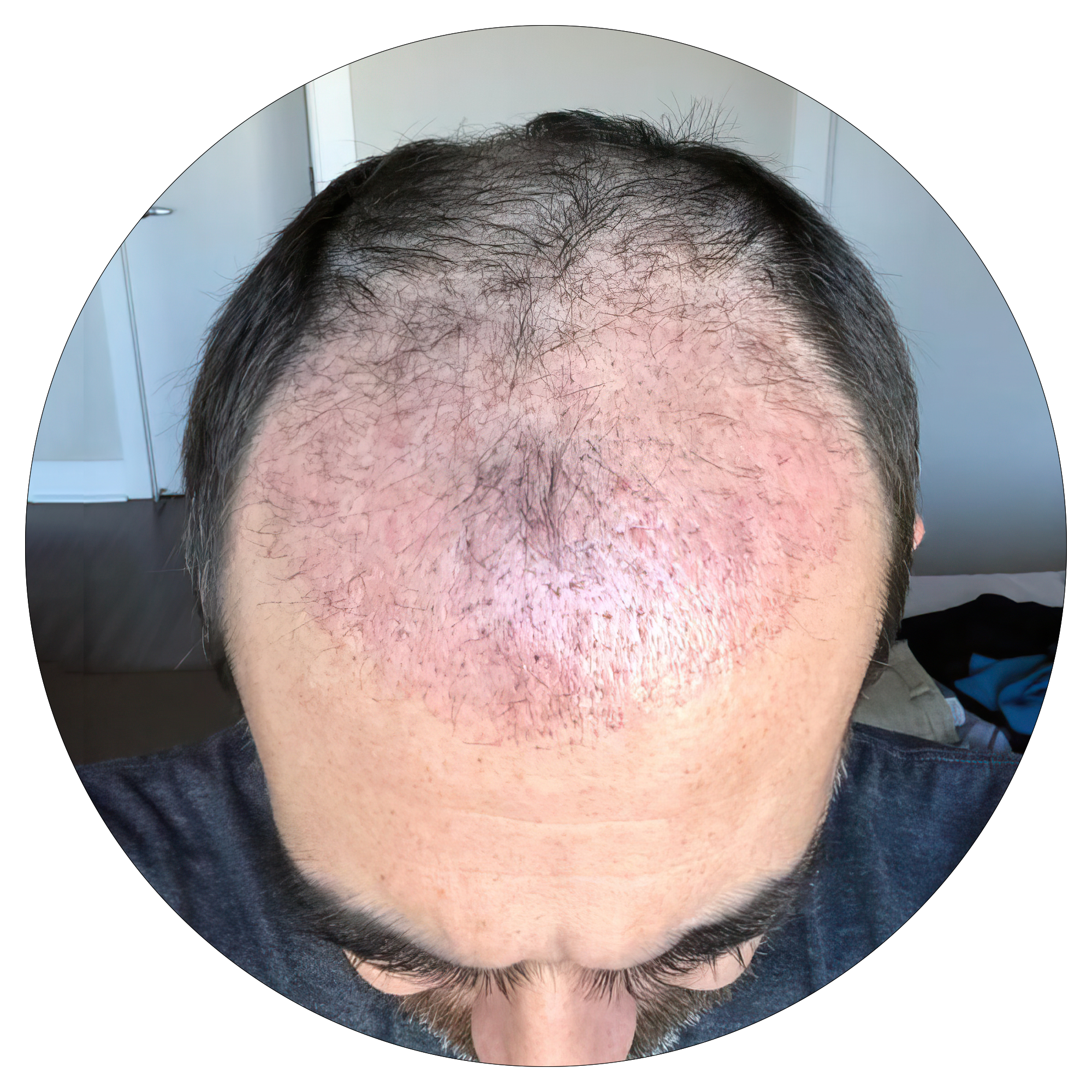
A Temporary Appearance: After shock loss, the transplanted area may return to its previous thin or bald appearance. This is completely temporary.
Patience is the Best Medicine: A hair transplant is a marathon. You need to wait until the 6th month to see real results and the 12th month for full density.
Tips for a Smooth Shock Loss Process
Watch Your Diet: Supplements like vitamins (especially Biotin and Zinc) help the follicles recover faster.
Follow Washing Instructions: Being gentle with the scalp during and after the scabbing phase improves the quality of follicle attachment.
Stay in Touch with Your Doctor: Unless you notice unusual redness or severe acne, do not be alarmed by the intensity of the shedding.
In Summary: Shock loss is the process of letting go of “old and tired” strands to make room for “young and permanent” hair. If your hair is shedding, it means the system is working!